
Naira weakens to N1,349/$ as US dollar falls on Iran talks
Naira weakens to N1,349/$ as US dollar falls on Iran talks
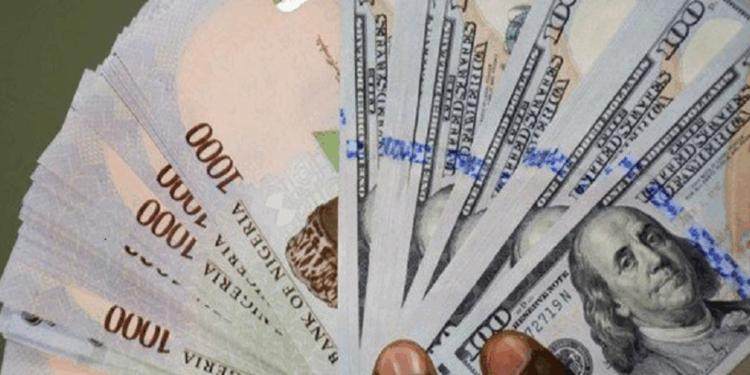
The naira depreciated to N1,349/$ on Monday, down from N1,342.5/$ recorded at the close of trading on Friday.
This is according to data published on the Central Bank of Nigeria (CBN).
The currency’s decline comes amid contrasting global currency movements, as the U.S. dollar weakened against major peers on the back of renewed optimism over potential peace talks linked to the Iran conflict.
Global foreign exchange markets responded to signals suggesting a possible ceasefire, despite lingering tensions between Washington and Tehran.
What the data is saying
The U.S. dollar weakened against a basket of major currencies, while other global currencies recorded gains, reflecting improved risk appetite among investors. At the same time, Nigeria’s currency came under pressure alongside declining external reserves.
The dollar index fell by 0.39% to 98.07 and is down 1.78 percent in April after rising 2.27% in March.
The euro strengthened by 0.16% to $1.1781, while the British pound rose by 0.16% to $1.3535.
The Japanese yen weakened slightly by 0.1% to 158.81 per dollar.
The naira depreciated to N1,349.67 per dollar from N1,342.5 per dollar, with intraday trading between N1,341 and N1,353 and an average of N1,349.72 per dollar.
These figures reflect diverging currency trends, with global optimism weighing on the dollar while local pressures continue to affect the naira.
More Insights
Market sentiment improved following signals that Iran may return to negotiations with the United States, raising hopes for a de-escalation of tensions. However, recent developments continue to pose risks to stability in the region.
Iran is considering attending peace talks with the United States in Pakistan following diplomatic efforts to ease tensions.
The United States recently seized an Iranian cargo ship accused of breaching its blockade, prompting threats of retaliation from Tehran.
The ongoing conflict, now in its eighth week, has disrupted global energy supplies and heightened uncertainty in financial markets.
Oil prices surged by more than 5% due to supply concerns linked to disruptions in the Strait of Hormuz.
These developments have influenced investor behaviour, with shifting expectations around risk and safe-haven assets shaping currency movements.
Nigeria’s external reserves have continued to decline, reflecting ongoing pressures in the foreign exchange market, although the Central Bank maintains that the trend is not alarming. The steady drop in reserves points to sustained interventions or capital outflows.
External reserves stood at $48.6 billion as of April 17, 2026, marking a cumulative decline of about $1.38 billion over five weeks.
Daily data shows reserves fell from $49.18 billion on April 1 to $48.72 billion by April 13, and further to $48.65 billion by April 16.
The Central Bank Governor, Olayemi Cardoso, said the decline should not be a cause for concern.
“In fact, what concerns me is not so much the decline in reserves, but the reaction to relatively small swings in the numbers, which in today’s market environment should not trigger anxiety.”
What you should know
Despite the recent dip, projections and policy outlooks remain relatively optimistic regarding Nigeria’s external reserves position.
The CBN has projected that reserves could rise to $51 billion by the end of 2026.
This projection forms part of a broader macroeconomic stabilization strategy aimed at strengthening external buffers.
The target is also linked to efforts to boost investor confidence and improve balance-of-payments resilience.
Source:https://nairametrics.com/2026/04/21/naira-weakens-to-n1349-as-us-dollar-falls-on-iran-talks/


About Post Author