FX reforms ignite confidence as inflows hit $20.98bn
FX reforms ignite confidence as inflows hit $20.98bn
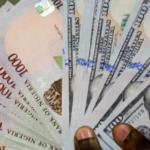
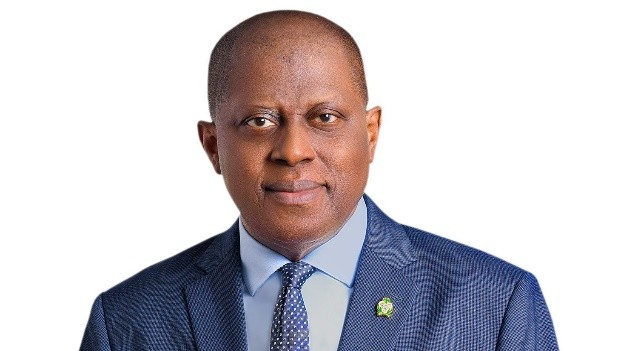
One of the most visible signs of renewed confidence in Nigeria’s economy is the transformation of the foreign exchange market, where reforms driven by the Central Bank of Nigeria have attracted foreign capital inflows worth $20.98bn in the first 10 months of 2025. This represents a 70 per cent increase over total inflows for 2024 and a 428 per cent surge compared to the $3.9bn recorded in 2023. CBN Governor, Olayemi Cardoso, says the surge reflects a resurgence in investor confidence and expects greater milestones in the months ahead.
The ongoing rise in forex inflows is widely seen as a demonstration of financial-sector stability and strengthening investor interest in the domestic economy. Already, the financial markets are witnessing renewed appetite for Nigerian assets from both domestic and global investors, as indicated in the latest capital inflow data. The renewed interest is linked to reforms instituted by the CBN under Cardoso’s leadership.
Upon assuming office in October 2023, the apex bank leadership prioritised actions to rebuild Nigeria’s economic buffers and strengthen overall resilience. The CBN’s policies, including currency reforms, led to investment inflows from abroad and reduced direct interventions in the domestic forex market. The unification of exchange rates and the clearing of over $7bn FX backlog improved Nigeria’s investment outlook, with multilateral organisations such as the World Bank describing the initiative as a bold intervention to enhance long-term sustainability.
Nigeria’s sovereign risk spread has since fallen to its lowest level since January 2020, erasing the premium that accumulated during the pandemic and subsequent economic strain. These moves, coupled with deliberate efforts to woo investors, have helped sustain capital inflows.
Cardoso explained that the apex bank has kept faith with exchange-rate unification, adding that the once-crippling multi-billion-dollar FX backlog has been fully cleared, restoring credibility and giving businesses renewed confidence to plan. Foreign capital inflows, he noted, have reached US$20.98bn in the first ten months of 2025, marking a clear resurgence in investor confidence.
The journey
Cardoso said the story of Nigeria’s economic recovery cannot be appreciated without recalling the challenges at the outset. “When this leadership team assumed office, our economy faced severe macroeconomic distortions. Inflation was surging. FX liquidity had evaporated. External reserves were nonexistent. Trust in economic management had weakened. Unorthodox monetary practices had eroded confidence. Businesses could not plan or price. Investors could not commit.”
He added, “The foreign exchange market was in paralysis. A backlog of over US$7 billion in unmet FX obligations undermined market integrity. The spread between official and parallel market rates had blown out to more than 60 per cent, creating distortions and rent-seeking opportunities.”
High inflation compounded the crisis. “High inflation had become normalised, stuck in double digits for most of the last 35 years and risen to 34.6% as of November 2024. Food prices were crippling households. Liquidity conditions were unstable. Many businesses faced an existential threat,” he said.
Cardoso noted that although the banking sector was fundamentally sound, it risked being dragged into distress by deteriorating macroeconomic conditions and inconsistent policy signals. “This was the Nigeria we inherited, not one standing at the edge of a macroeconomic precipice, but one that had already gone over the cliff,” he said. He stressed that the progress seen today is meaningful only when measured against the depth of earlier challenges.
Achieving economic turnaround
According to Cardoso, Nigeria’s economy has transitioned from crisis management to laying the foundation for sustainable recovery in the past 12 months. “After nearly a decade in which real GDP growth averaged about two per cent, reforms have restored momentum and confidence in our broad macroeconomic environment. Our economy grew by 4.23 per cent in the second quarter of 2025, the strongest pace in four years,” he said.
He noted that inflation has moderated consistently. “From a peak of 34.6 per cent in November 2024, it has more than halved to 16.05 per cent in October 2025. This marks seven consecutive months of disinflation,” he stated. Food inflation fell to 13.12 per cent in October, down from 16.87 per cent in September and 21.87 per cent in August. Cardoso said the decline in inflation is restoring real purchasing power and reflects disciplined execution and a return to orthodox monetary policy. He added that the CBN will continue to target price stability, strengthen monetary transmission, and project continued disinflation into 2026.
Stronger rebased GDP
Nigeria’s hope of achieving a $1tn economy by 2030 is expected to draw significant support from the banking sector. Statistician-General of the Federation, Adeyemi Adeniran, explained that the rebased GDP results show nominal GDP rising from N205.09tn in 2019 to N372.82tn in 2024. The NBS noted significant structural shifts, with rising shares for agriculture and services and a relative decline in industry.
Adeniran said rebasing provides timely, accurate data that better reflects economic reality. Economists, including Aliyu Ilias, noted that previously un-captured sectors such as entertainment now receive proper recognition, improving investor perception and guiding resource allocation.
Seun Onigbinde of BudgIT said GDP rebasing reflects the impact of policies over time and improves the design of social and fiscal programmes. BudgIT’s Country Director, Gabriel Okeowo, added that rebasing allows planners to be more intentional in addressing poverty, infrastructure, and job creation.
Lagos-based economist Nelson Adedeji emphasised that statistical adjustments alone cannot transform livelihoods. He said genuine improvement requires policies addressing infrastructure, security, agriculture, manufacturing, and the business environment.
Banking sector contributions
Cardoso has advised banks to prepare for a new round of recapitalisation to support President Bola Tinubu’s $1tn GDP ambition. He argued that current bank capitalisation cannot support the scale of economic expansion expected by 2030. “Will Nigerian banks have sufficient capital relative to the financial system’s needs in servicing a $1tn economy in the near future? In my opinion, the answer is ‘No!’ unless we take action,” he said.
Stakeholders speak
Despite global volatility, Nigeria has attracted foreign capital, reassured by currency reforms. “Nigeria appears to be back in business as long-awaited economic reforms take shape,” said Emre Akcakmak of East Capital. Key drivers include improved currency liquidity, investor repatriation leeway, and a stable naira.
Samir Gadio of Standard Chartered Plc said portfolio inflows have been supported by improved confidence, better FX market functioning, moderating dollar-naira volatility, and a strong nominal yield buffer. He added that Nigeria’s local market is less correlated with global risk conditions than more liquid emerging-market peers.
For many businesses, the outlook for 2025 promises optimism as the benefits of FX reforms, exchange-rate alignment, and significant budget outlays begin to materialise across the economy.
Source: https://punchng.com/fx-reforms-ignite-confidence-as-inflows-hit-20-98bn/


About Post Author