Monetary Reform as Blueprint for Sustainable Growth
Monetary Reform as Blueprint for Sustainable Growth
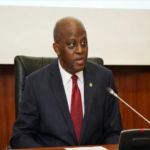
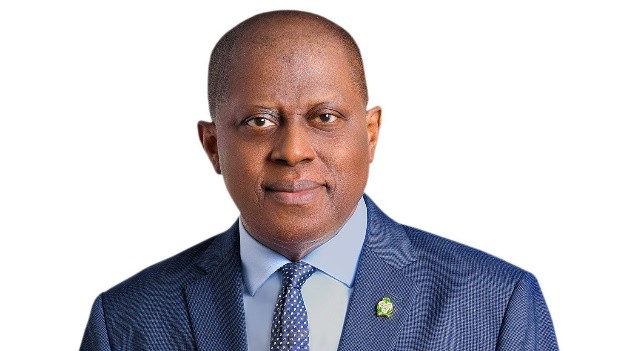
At the 60th Annual Bankers’ Dinner, Central Bank Governor Olayemi Cardoso delivered a speech that was both reflective and forward-looking, a sweeping account of Nigeria’s reform trajectory and its transition into a sustainable growth phase. The address was not mere rhetoric; it was a detailed narrative of how Nigeria has moved from crisis to stability, and how reforms are now laying the foundation for resilience and inclusive prosperity.
Cardoso began by situating the moment in history. “Tonight, we gather at a defining moment for our nation one marked by global uncertainty, domestic recalibration, and deep institutional rebuilding.” This framing was deliberate. It reminded stakeholders that Nigeria’s economic story cannot be divorced from the global context of geopolitical tensions, supply-chain realignments, and tightening external financing conditions. Yet, amid these headwinds, Nigeria’s reforms have begun to bear fruit, positioning the country as one of Africa’s leading examples of disciplined economic management.
INFLATION TARGETING
The first pillar of reform Cardoso highlighted was inflation moderation. Nigeria had been trapped in a cycle of double-digit inflation for decades, with food prices crippling households and liquidity conditions destabilising businesses. By November 2024, inflation had surged to 34.6 percent, a level that threatened the very fabric of economic planning. Cardoso recalled this moment starkly: “High inflation had become normalised, stuck in double digits for most of the last 35 years and risen to 34.6 per cent as of November 2024. Food prices were crippling households. Liquidity conditions were unstable. Many businesses faced an existential threat.” Against this backdrop, the Central Bank’s return to orthodox monetary policy was decisive. By October 2025, inflation had more than halved to 16.05 per cent, with food inflation dropping to 13.12 percent. This was not happenstance but the result of deliberate measures: ending monetary financing of fiscal deficits, strengthening data analytics, and improving communication. Cardoso underscored the significance of this achievement: “Price stability is the foundation of sustainable growth. Our transition to an inflation-targeting framework is gaining traction.”
FX REFORMS
Equally transformative has been the overhaul of the foreign exchange market. For years, Nigeria’s FX regime was plagued by opacity, distortions, and rent-seeking opportunities. The backlog of unmet obligations exceeded $7 billion, while the spread between official and parallel market rates ballooned to over 60 percent. Cardoso described the situation bluntly: “The foreign exchange market was in paralysis. A backlog of over $7 billion in unmet FX obligations undermined market integrity. The spread between official and parallel market rates had blown out to more than 60 per cent, creating distortions and rent-seeking opportunities.” The reforms introduced under his leadership unification of exchange-rate windows, clearance of the backlog, and deployment of the Electronic Foreign Exchange Management System (EFEMS) restored credibility. The naira now trades within a narrow, stable range, with the gap between official and parallel markets shrinking to under 2 percent. Investor confidence has surged, with foreign capital inflows reaching $20.98 billion in the first ten months of 2025, a 428 percent increase compared to 2023. Cardoso captured the essence of this turnaround: “Together, these reforms have reduced opacity and manipulation, and restored discipline to the market. The naira now trades within a narrow, stable range.”
STRENGHTENED EXTERNAL RESERVES
The strengthening of Nigeria’s external buffers further validates the reform trajectory. Foreign reserves climbed to $46.7 billion by mid-November 2025, the highest in nearly seven years, providing over 10 months of import cover. The current account balance rose by 85 percent to $5.28 billion in Q2 2025. Importantly, these reserves are being rebuilt organically, not through borrowing, but via improved market functioning, stronger non-oil exports, and robust capital inflows. Cardoso emphasised this point: “What is most important here is that our FX reserves are being rebuilt organically, not by borrowing, but through improved market functioning, stronger non-oil exports, and robust capital inflows.” This signals a structural shift in Nigeria’s external sector, reducing dependence on oil and enhancing resilience to global shocks.
BANKING REFORMS
The banking sector has also been a focal point of reform. Stress tests confirm its robustness, and recapitalisation is firmly on track. With the March 2026 deadline approaching, 27 banks have raised capital through public offers and rights issues, and 16 have already met or exceeded new thresholds. Cardoso noted: “Several banks have already met the new capital thresholds, while others are advancing steadily and are well positioned to comfortably meet the March 31, 2026 deadline.” Beyond numbers, the Central Bank is redesigning the credit-risk framework to enforce stronger governance and accountability, determined to break the boom-and-bust cycle of past recapitalisation efforts. Microfinance lending expanded by over 14 percent in 2025, and digital-credit products reached more than 1.2 million small enterprises. This focus on MSMEs reflects a broader commitment to inclusive growth, ensuring that reforms translate into opportunities for smaller businesses and households.
Digital finance and payment-system modernisation have accelerated Nigeria’s transformation. More than 12 million contactless payment cards are now in circulation, and fintech adoption is deepening. Nigeria stands among Africa’s most advanced digital payments markets, with eight of the continent’s nine unicorns originating from the country. Cardoso highlighted this achievement: “Supported by these measures, Nigeria today stands among Africa’s most advanced digital payments markets, with a dynamic fintech ecosystem that has produced eight of the continent’s nine unicorns.” The Central Bank extended its Payment System Vision roadmap to 2028, tightened agent-banking guidelines, and improved interoperability across switching companies. These reforms balance innovation with stability, ensuring consumer protection while fostering fintech growth. Cardoso’s emphasis on responsible innovation is critical: “Innovation must proceed responsibly, anchored in consumer protection and financial stability.”
EXIT FROM FATF GREY LIST, UNCLOCKING NEW POTENTIAL
Nigeria’s exit from the FATF grey list in 2025 was another milestone. Grey-listing carried significant costs, including a potential $30 billion drop in capital inflows. Exiting the list signals restored confidence and eases compliance frictions for correspondent banks. Cardoso acknowledged the significance. Cardoso said: “Nigeria’s grey-listing carried a significant cost: countries in this category typically experience a 7.6 per cent of GDP drop in capital inflows in the first year, for Nigeria, that translates to more than $30 billion in potential investment. Exiting the list therefore signals a major restoration of confidence and eases compliance frictions for correspondent banks. The global financial community has welcomed Nigeria’s exit, noting improved access to international finance and smoother cross-border payments.” This achievement reflects coordinated national effort, with contributions from the Central Bank, Ministry of Justice, NFIU, EFCC, and regional partners.
REFORMS SPARK RENEWED CONFIDENCE
International confidence has been further reinforced by rating agencies. Fitch upgraded Nigeria from B- to B (stable), Moody’s raised its rating from Caa1 to B3, and S&P revised its outlook to positive. Cardoso noted: “Across all three agencies, the direction is consistent: fundamentals are strengthening, reform credibility is rising, and Nigeria’s risk profile is improving.” These upgrades translate into improved borrowing terms, increased investment inflows, and enhanced credibility. Nigeria’s successful $2.35 billion Eurobond issuance, attracting $13 billion in orders, underscores this progress.
Fiscal-monetary coordination has also been strengthened. The discontinuation of direct deficit financing is a cornerstone of discipline. Fiscal authorities have implemented a Revenue Optimisation framework, established a National Revenue Agency, and upgraded the Treasury Single Account. Cardoso was unequivocal: “This stance is unequivocal: there will be no return to the practice of financing fiscal deficits by the Central Bank.” This alignment reinforces Nigeria’s transition towards inflation targeting and durable price stability.
LOOKING AHEAD
Looking ahead, Cardoso outlined clear priorities for 2026: strengthening the banking system, delivering durable price stability, modernising payments and promoting inclusion, fostering responsible fintech innovation, building institutional capacity, and deepening partnerships. He stressed: “These priorities are not abstract aspirations, they are practical, measurable, and fully aligned with our mandate to safeguard monetary and financial stability.”
In conclusion, Cardoso’s speech was not just a recounting of reforms but a declaration of Nigeria’s new economic trajectory. “The foundation for a revitalised Nigeria has been laid, but the journey is far from complete,” he said. The progress achieved reflects partnership, discipline, and the courage to pursue necessary reforms. It demonstrates that Nigeria can chart a new economic course defined by stability, innovation, opportunity, and shared prosperity.
Source: https://www.thisdaylive.com/2025/12/02/monetary-reform-as-blueprint-for-sustainable-growth/


About Post Author