Rewane projects N519.75tn capital market growth by 2028
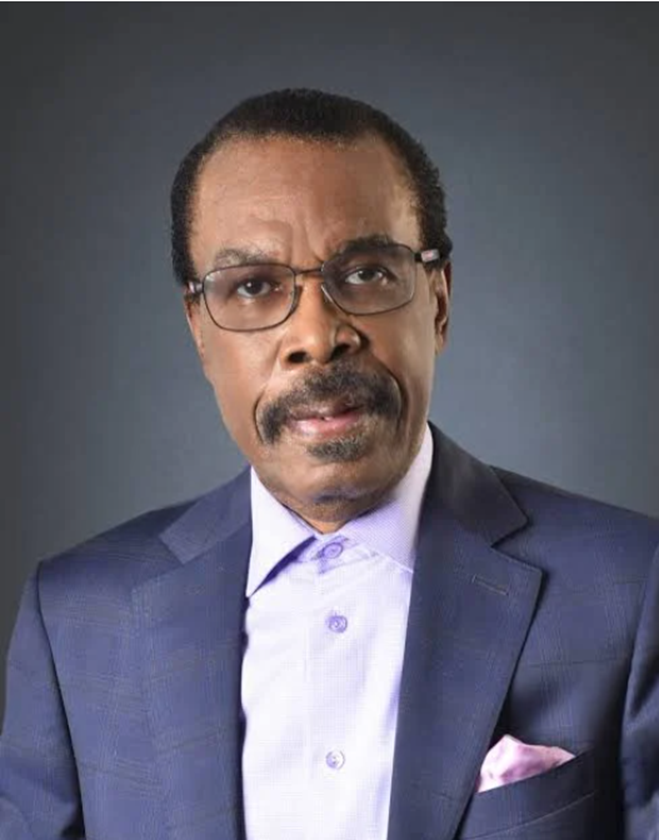
The Managing Director and Chief Executive Officer of Financial Derivatives Company Limited, Bismarck Rewane, has projected that Nigeria’s capital market could expand 2.25-fold to N519.75tn by 2028, driven by price effects, stronger domestic participation, ongoing reforms, new listings and wider investor engagement.
Rewane made the projection while delivering the 2027 macroeconomic outlook at the 2026 Parthian Economic Discourse in Lagos, where financial and industry leaders stressed that Nigeria’s next phase of reform must move beyond macroeconomic stabilisation towards building strong institutions, trusted markets and productive capital for sustainable business competitiveness.
He also projected that headline inflation could moderate to 13 per cent by 2028 as productivity and economic efficiency improve. He, however, cautioned that policy pronouncements alone would not deliver the projected outcomes without institutional overhaul.
He said, “There is a difference between policy reform and institutional reform.
“Nigeria has been changing policies over the years but has not been able to reform the institution that delivers them.”
Convened to examine Nigeria’s 2027 macroeconomic outlook and the structural conditions required for long-term competitiveness, the annual discourse brought together executives from finance, industry, development finance institutions and the digital economy.
Earlier in his welcome address, the Group Managing Director of Parthian Financial Services Limited, Oluseye Olusoga, stated that national competitiveness must be measured by the capacity of Nigerian enterprises to deliver quality goods at prices capable of competing in regional and global markets.
“A competitive economy is one that does two things very well: it produces at competitive prices and gets more out of every resource, every Naira and every hour,” Olusoga said.
He continued, “Competitiveness is when a Nigerian product wins in Accra, Nairobi and Rotterdam on price and quality without any extraordinary help.
“A weak Naira can make our goods cheap for a while, and protection can make our goods the only option for a while, but neither makes us competitive.”
Olusoga noted that declining operating costs, higher productivity, deeper domestic capital markets and predictable regulation were critical if economic reforms were to translate into higher household incomes and improved living standards.
“What Nigeria needs in 2027 is policy stability, strong institutions and staying the course,” he said.
During a panel session themed ‘Building a Competitive Economy: The Next Frontier of Nigeria’s Reform Agenda,’ speakers examined structural bottlenecks limiting the expansion of Micro, Small and Medium Enterprises, including digital infrastructure gaps, payment systems, credit access, alternative collateral frameworks and regulatory coordination.
The Managing Director-Designate of Parthian Financial, Foluso Ayo-Olaiya, urged commercial lenders to transition from collateral-led lending to structuring transactions around the cash flows and operational realities of viable businesses.
“To build a competitive economy, financial institutions must shift from collateral lending to structuring deals for businesses while mitigating risks through collaboration with development finance institutions and export credit agencies,” Ayo-Olaiya said.
Also speaking, a general manager at the Bank of Industry, Dr Isa Omagu, underscored the centrality of human capital development to sustainable economic transformation, noting, “If you fix the people, the country will be fixed.”
In a fireside chat titled Financing Nigeria’s Next Growth Phase, the Managing Director and Chief Executive Officer of the Nigeria Sovereign Investment Authority, Aminu Umar-Sadiq, emphasised the need for deliberate risk-mitigation mechanisms to unlock long-term institutional capital for critical infrastructure.
“Bankability is a necessary but insufficient condition for mobilising long-term capital into the power sector,” Umar-Sadiq said.
“Other important considerations include the opportunity cost of capital, the regulatory framework, risk mitigation and credit enhancement”, he added.
The Managing Director and Chief Executive Officer of First Bank of Nigeria Limited, Olusegun Alebiosu, identified institutional trust and a functional legal framework as prerequisites for private sector-led growth and MSME expansion.
“The private sector should be richer than the public sector if we are to grow as a country,” Alebiosu said.
“The biggest problem we have in Nigeria today is trust”, he added.
The discourse concluded with a consensus on combining policy consistency with institutional reforms, reliable infrastructure, deeper capital markets and a culture of trust to enable Nigerian businesses to compete on merit rather than protectionism.


About Post Author